Why Your Ducted Air Conditioner Isn't Heating or Cooling Your Whole House
Why Your Ducted Air Conditioner Isn't Heating or Cooling Your Whole House
You turn the air con on. It's running. The unit is spinning, the air is moving, and the thermostat says you've hit temperature.
But the back bedrooms are still stuffy. The kitchen is warm. The lounge room is fine and the rest of the house hasn't caught up. Sound familiar? The answer is probably not what you think.
It's Usually Not a Fault
When a ducted system doesn't condition every room properly, most people assume something is broken. A gas leak, a failing motor, a clogged filter.
Sometimes those things are the culprit. But more often, the system is working exactly as it was set up.
The problem is that it was never set up to do what you're expecting it to do.
This is one of the most common things we find when we walk through a home. The system runs fine. The installation, however, tells a different story.
The System Is Undersized for Your Home
This is probably the most common root cause, and the hardest to spot.
When a ducted system is designed, it needs to be sized to match the actual volume of space it's conditioning. That means measuring every room, accounting for ceiling heights, window placement, insulation quality, and how the house sits in relation to the sun.
Some installers skip that work. They estimate. They use a simplified room count, pick a unit that looks close enough, and move on.
A unit that's too small for your home will run constantly. It'll push at full capacity and still struggle to reach temperature in every room. In Canberra's summer heat or winter cold, the gap between what the system can deliver and what the house demands becomes obvious fast.
An undersized system won't break straight away. It'll just never quite do the job. And it'll wear out faster in the process.
The Duct Design Is Uneven
Even a correctly sized unit can fail to condition your whole house if the duct layout hasn't been thought through.
Ducted air conditioning distributes airflow through a network of ducts that branch from the indoor unit to each outlet.
For that to work properly, each branch needs the right amount of airflow to reach its destination.
If some runs are short and some are long, and no one has accounted for that, the short runs get flooded with air while the long runs barely get a trickle.
The bedroom at the far end of the house stays warm in summer and cold in winter because the air simply can't get there in the right quantity.
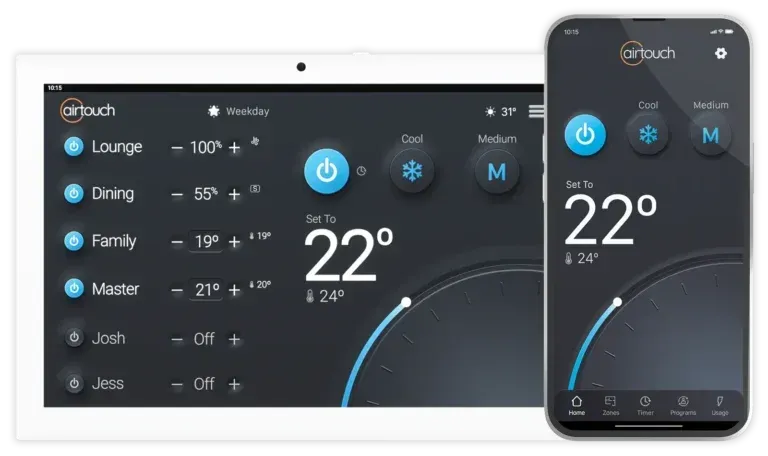
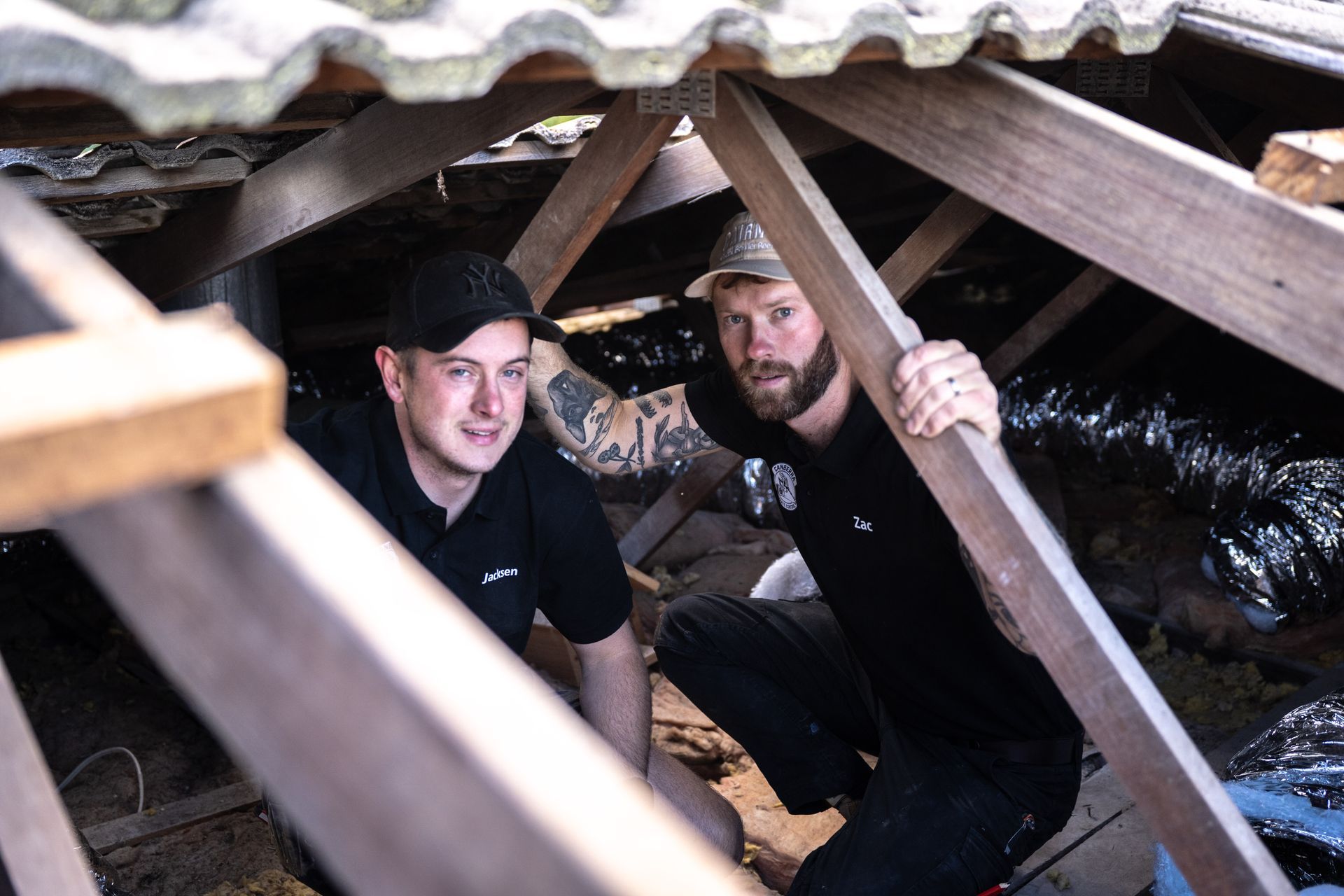
We see this on jobs where we're called in to add zoning or an AirTouch 5 to an existing system. You go into the roof and the ductwork tells you everything straight away. Good duct design is calculated before a single piece of material gets cut. It accounts for run length, branch sizing, and how airflow needs to travel through the whole house. That work takes time. Not everyone does it
The Zoning Is Too Basic
Zoning is one of the most misunderstood parts of a ducted system.
Most installs come with a basic two-zone setup. Upstairs and downstairs, or living areas and bedrooms. You can open or close zones from the controller and direct airflow around the house.
The problem is a simple two-zone system often leaves a lot of the house without real control. You might be running a zone that covers six rooms, with no way to direct air specifically to the two rooms that actually need it right now.
Some installers use minimal zoning to reduce the cost of the job. A two-zone setup is cheaper to put in than a properly planned multi-zone layout. But it leaves the homeowner with a system that can't respond to how the house is actually used.
A well-designed zoning setup with a smart controller gives the system real flexibility. Airflow goes where it's needed rather than spreading across rooms no one is sitting in.
The Controller Is Reading from the Wrong Place
Here's one that surprises most homeowners.
A standard ducted system has one temperature sensor. It's typically located near the return air intake, often in the main hallway. When the system reads that the hallway has hit the set temperature, it considers the job done.
But the hallway isn't your bedroom. It isn't your living room. It's the room air passes through on its way back into the system, which means it reaches temperature first.
Meanwhile the rooms further from the intake are still warm. The system doesn't know that. As far as it's concerned, the house is sorted.
This is exactly the problem a smart controller like the AirTouch 5 fixes. Wireless sensors sit in each room and read the actual temperature where you are, not where the air returns. When your bedroom hits temperature the system backs off. When your living area is still warm it keeps pushing air there. One unit doing the work of many zones, properly.
What to Do If You're Dealing With This Now
If your system is running but not conditioning every room, the first step is working out which category the problem falls into.
Is airflow noticeably weak in certain rooms? That points to duct design or a unit that's undersized.
Is airflow okay but some rooms never reach temperature? That suggests the unit can't handle the load it's being asked to carry.
Are some rooms fine while others are nowhere near temperature? That's usually a zoning or sensor issue.
A good installer can diagnose this quickly with a look through the roof space and a walk through the house. You don't need to guess, and you don't need to just live with it.
How to Avoid This on a New Install
If you're planning a new ducted system, or replacing an existing one, this is where you have full control.
Ask your installer how they're calculating the system size. If they can give you a number without measuring your rooms, that's a warning sign.
Ask about the duct design. How are they planning the layout? How are they balancing airflow across different run lengths?
Ask about zoning. How many zones are included and how does the controller manage them?
The answers to those questions will tell you a lot about what you're actually buying.
We measure every room, work through the duct layout before anything gets ordered, and size the system properly for your home and Canberra's climate.
If you want a straight answer about your current system or you're planning a new one, give us a call. We'll tell you exactly what we find: 0413 096 754
Share
You might also like